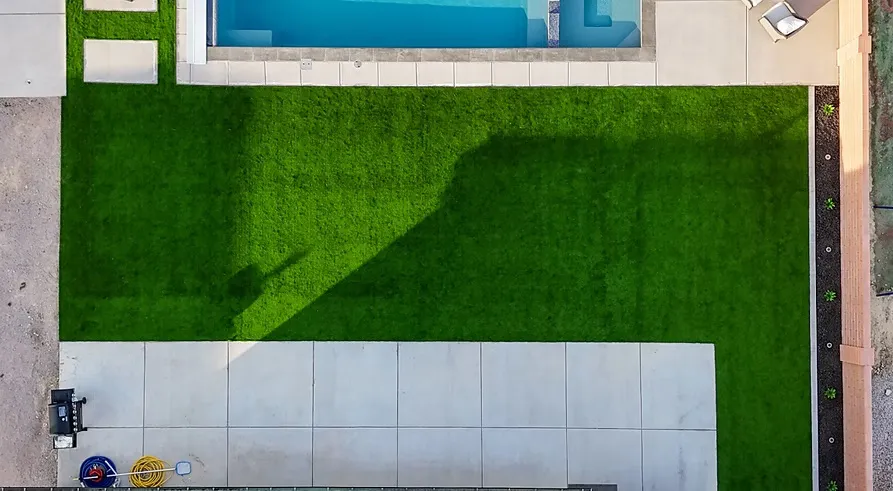
Synthetic Grass vs. Real Grass: What St. George Homeowners Need to Know
Synthetic Grass vs. Real Grass: What St. George Homeowners Need to Know
"Synthetic grass" and "artificial turf" mean the same thing, but a lot of people searching for one term never think to search the other, which means the actual product info can look scattered depending on where you're reading it. Here's a straight answer on what synthetic grass actually is, and what it means for a yard in Southern Utah specifically.
What synthetic grass is actually made of
Modern synthetic grass isn't the plastic-looking product from decades ago. It's built from polyethylene or polypropylene fibers designed to mimic the look and feel of real grass blades, stitched into a backing and filled with infill material that keeps the blades upright and the whole system stable. The quality range within synthetic grass is wide, cheap product uses thinner fibers and weaker backing, while better synthetic grass uses denser fiber counts and reinforced, UV-stable backing built to hold up under real sun exposure.
Cost comparison with real grass
Real grass is cheaper to install and more expensive to keep. Synthetic grass costs more upfront, but the ongoing expense drops close to zero, no water, no fertilizer, no weekly mowing, no reseeding dead patches. In Southern Utah specifically, where summer water costs for a natural lawn climb fast, synthetic grass often pays back its higher install cost faster than people expect, since the water savings alone are significant here compared to milder climates.
How synthetic grass handles heat
This is the most common concern we hear, and it's a fair one. Synthetic grass can run warmer than real grass in direct summer sun. The fix isn't avoiding synthetic grass altogether, it's choosing the right product and infill for a hot climate. Lighter-colored fibers and cooling infill options reduce surface temperature meaningfully, which matters more here than in a market where summer heat isn't a daily factor.
Does synthetic grass look real?
Quality synthetic grass today looks close enough that most people can't tell from a normal viewing distance, especially with varied blade colors and a natural-looking thatch layer built in rather than one flat shade of green. Lower-end synthetic grass still looks artificial, uniform color, plastic sheen, which is usually where the "fake grass" reputation comes from. The product itself has improved a lot; not every product on the market has kept up.
Maintenance reality
Synthetic grass isn't zero-maintenance, it's low-maintenance. An occasional rinse and brush keeps it looking right, and pet areas need slightly more regular attention to stay odor-free. Compared to a real lawn's weekly mowing, edging, and fertilizing schedule, the difference in actual time spent is significant.
Making the decision for your yard
Synthetic grass makes the most sense for homeowners tired of the water bill and weekly upkeep of real grass, especially in a desert climate where natural grass fights the environment year-round. If a green lawn without the maintenance sounds better than a green lawn that demands constant attention, that's the actual decision being made here, not a debate about which one is "better" in the abstract.