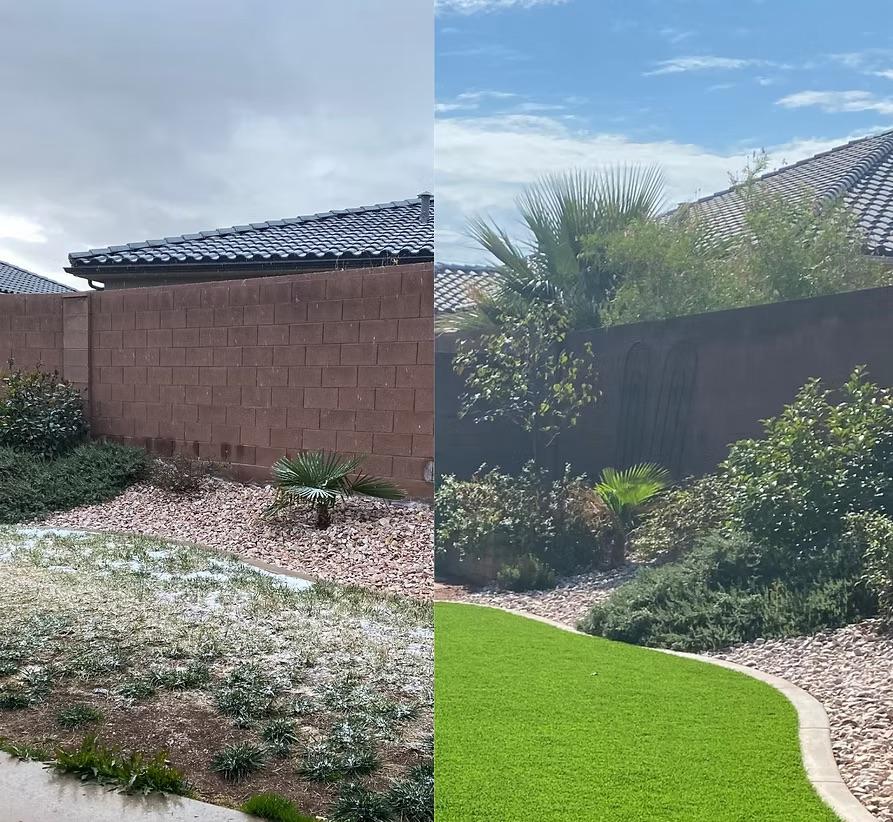
Artificial Turf vs. Natural Grass in St. George: Which Actually Makes Sense?
Artificial Turf vs. Natural Grass in St. George: Which Actually Makes Sense?
Every homeowner in St. George eventually asks this question, usually right after a summer water bill or a weekend spent fighting dead patches in the yard. Natural grass and artificial turf aren't really competing on the same terms, they're solving the lawn problem in completely different ways. Here's how they actually compare once you get past the surface-level pitch.
Water use isn't close
This is the biggest factor for most people in Southern Utah, and it's not subtle. A natural grass lawn in our climate needs regular, often daily, watering through the summer just to survive, let alone stay green. Artificial turf needs none. For a property owner watching water costs climb every summer, this single difference is usually what tips the decision, not appearance, not maintenance, just the water bill itself.
Upkeep time versus upkeep cost
Natural grass demands ongoing weekly effort, mowing, edging, fertilizing, weed control, aerating, dealing with brown patches. Some of that you do yourself, some you pay someone else to do, but it never stops as long as you have the lawn. Turf demands almost nothing after install, an occasional rinse and brush. The tradeoff is timing, natural grass costs less upfront and more over time, turf costs more upfront and close to nothing afterward.
How they hold up in our specific climate
Southern Utah's combination of intense summer heat and low humidity is genuinely hard on natural grass. Even well-maintained lawns brown out or thin during peak summer unless you're watering aggressively, and most grass types available here aren't naturally built for this climate to begin with. Turf doesn't care about heat the same way, it won't die, brown, or go dormant. The one real climate consideration with turf is surface temperature in direct sun, which is manageable with the right infill choice, but worth being aware of if you're planning heavy summer use.
Look and feel, honestly
Quality artificial turf today looks and feels genuinely close to real grass, closer than most people expect if their only reference is turf from 15 or 20 years ago. It won't be identical, and if that distinction matters a lot to you, that's worth being honest with yourself about before installing. But for the vast majority of homeowners, especially with pets or kids using the yard daily, the practical benefits outweigh a small difference in feel underfoot.
Where natural grass still makes sense
Turf isn't automatically the right call for every situation. Large open acreage where full coverage would be a major expense, areas with heavy tree cover and root systems that complicate installation, or a homeowner who genuinely enjoys lawn care as a hobby rather than a chore, these are all real reasons natural grass might still be the better fit for a specific property.
Making the actual decision
The honest answer for most St. George homeowners comes down to how much you value your time and your water bill versus the lower upfront cost of grass. If you're tired of one and willing to pay more upfront to be done with it permanently, turf makes sense. If you don't mind the weekly work and want the lowest possible starting cost, grass still has its place.